

Early Cavity Care Without the Drill
Curodont™ Drill-Free Cavity Treatment
Curodont™ is an innovative, non-invasive treatment designed for certain early-stage cavities and enamel lesions.
Instead of removing healthy tooth structure with a dental drill, Curodont™ uses a biomimetic approach to support mineral repair within qualifying areas of early tooth decay.
For patients who catch cavities early, this treatment may provide an alternative to conventional fillings while helping preserve more of the natural tooth structure.
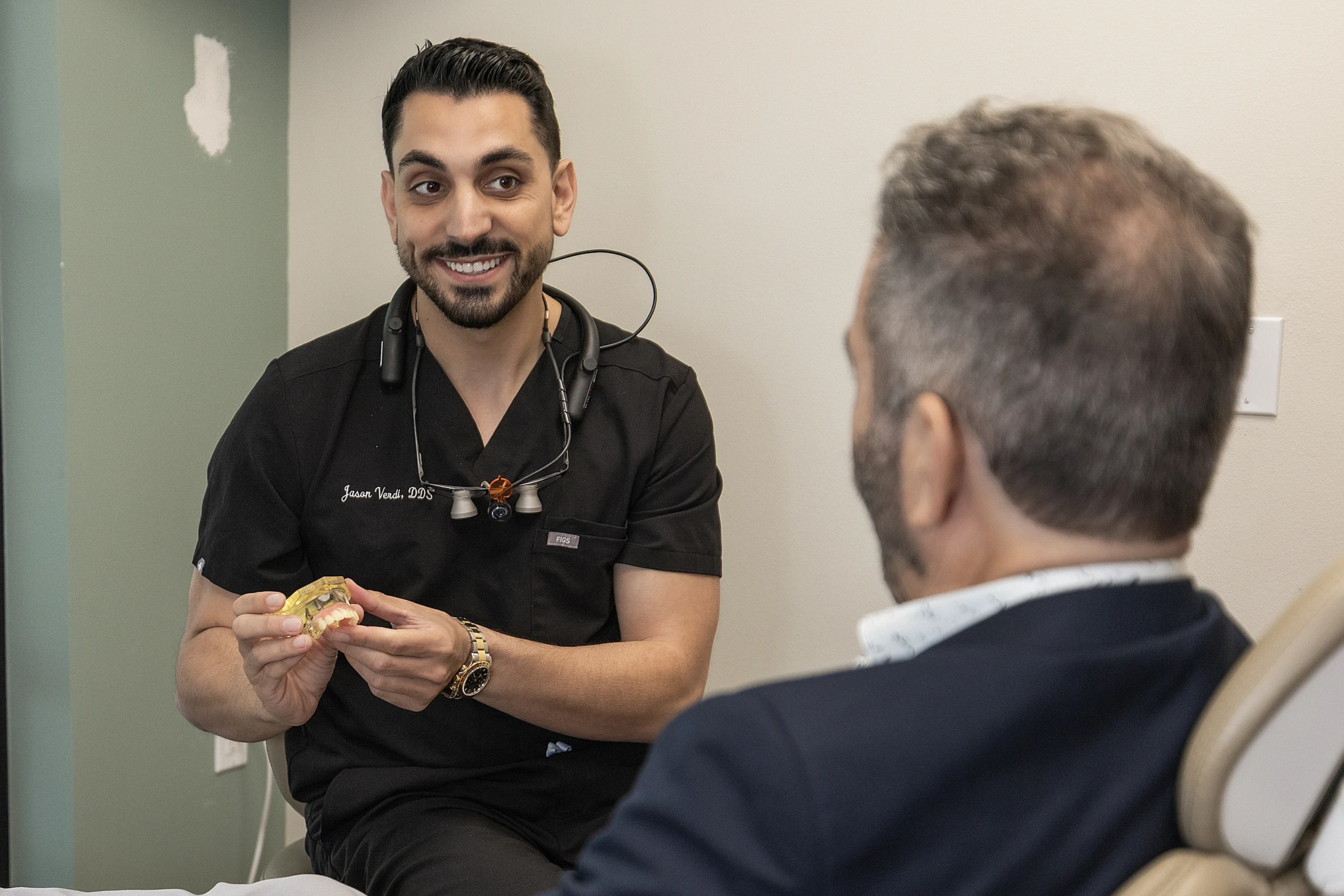
Modern Dentistry, Beautifully Personal

Curodont™ for Early-Stage Cavities
Early tooth decay does not always cause pain or other noticeable symptoms. In many cases, a cavity can begin developing beneath the enamel before a visible hole forms.
During a routine dental examination, your dentist may identify these early lesions through a clinical examination and dental X-rays.
Curodont™ is designed for qualifying lesions that are still in the early stages of development. By addressing mineral loss before the decay progresses deeper into the tooth, treatment may help slow or stabilize the lesion while preserving the surrounding healthy enamel.
What Is Curodont™?
Curodont™ Repair Fluoride Plus is a non-invasive treatment designed for selected early enamel lesions and white spot lesions.
Unlike a traditional composite filling, Curodont™ does not require the dentist to remove the decayed portion of the tooth with a dental drill. Instead, its biomimetic technology is designed to penetrate qualifying early lesions and support the natural mineralization process.
The treatment uses a self-assembling peptide matrix to help attract minerals involved in the formation of hydroxyapatite, the primary mineral component of tooth enamel.
This makes Curodont™ a minimally invasive option for appropriately selected early-stage decay.
How Does Curodont™ Work?
Tooth decay begins when acids produced by oral bacteria contribute to the loss of minerals from enamel. If the process continues, the weakened area can progress deeper into the tooth and eventually form a cavity requiring restorative treatment.
Curodont™ is designed to address certain lesions before they reach that stage.
- Works Within Early Enamel LesionsThe Curodont™ peptide matrix can penetrate qualifying early enamel lesions and provide a framework that supports mineral deposition.
- Supports Enamel RemineralizationMinerals naturally present in saliva can contribute to the formation of hydroxyapatite within the treated lesion, helping strengthen areas affected by early demineralization.
- Preserves Natural Tooth Structure
Because Curodont™ does not require conventional drilling for qualifying lesions, healthy enamel does not need to be removed simply to place a filling. - May Help Prevent ProgressionTreating appropriate early lesions may help stabilize or slow the progression of decay before more extensive restorative treatment becomes necessary.
Benefits of Curodont™ Treatment
Curodont™ may be an appealing option for patients with qualifying early-stage enamel lesions because treatment can offer several advantages:
- No dental drilling for qualifying lesions
- Typically no injection or local anesthetic
- No traditional filling material
- Minimally invasive treatment
- Helps preserve natural tooth structure
- Quick application
- Comfortable treatment experience
- Can be considered for selected children, teens, and adults
- May be appropriate for certain white spot lesions
- Can complement routine fluoride and preventive dental care
Curodont™ is not appropriate for every cavity. Your dentist must evaluate the location and depth of the lesion before recommending treatment.
What to Expect During Curodont™ Treatment
Curodont™ treatment is designed to be straightforward and minimally invasive.
Comprehensive Examination
Confirm Treatment Eligibility
Clean and Prepare the Tooth
Apply the Curodont™ Treatment
Monitor the Treated Area
How Long Does Curodont™ Treatment Take?
The application itself can be completed relatively quickly, depending on the number, location, and characteristics of the lesions being treated.
Although the clinical application occurs during the dental visit, the mineralization process continues after treatment.
Your dentist may recommend follow-up visits to monitor the treated tooth and determine whether additional preventive or restorative care is necessary.
When a Traditional Filling May Still Be Needed
Curodont™ cannot treat every cavity. Decay that has progressed into the dentin, created a visible hole, weakened the tooth, or caused pain may require a filling, crown, root canal, or another restorative procedure. A clinical examination and appropriate X-rays are necessary to determine the safest treatment.
What to Expect During Treatment
Your dentist will first examine the tooth and confirm that the area is suitable for Curodont™. The tooth is cleaned and isolated before the material is applied directly to the early lesion. The application itself is brief, and most patients can return to normal activities right away. The mineral repair process continues after the visit. Follow-up examinations and X-rays may be recommended to monitor the area, and consistent brushing, flossing, fluoride use, and routine dental care remain important.

Curodont™ Drill-Free Cavity Treatment FAQ
- What is Curodont™?
- Curodont™ Repair Fluoride Plus is a minimally invasive treatment designed for qualifying early-stage enamel lesions and certain white spot lesions. Its biomimetic peptide technology supports mineral formation within early areas of enamel demineralization without the conventional drilling and filling process.
- Can Curodont™ treat every cavity?
- No. Curodont™ is intended for specific early-stage lesions that remain within the enamel. Cavities that have progressed into the dentin, created a substantial hole, weakened the tooth, or caused significant symptoms may require conventional restorative treatment.
- Does Curodont™ replace a dental filling?
- Curodont™ may provide an alternative to a filling for certain early-stage lesions. However, it does not replace fillings when a cavity has progressed far enough to require removal of damaged tooth structure and restoration.
- Is Curodont™ painful?
- Curodont™ is a minimally invasive treatment and typically does not require drilling or injections for eligible lesions. Most patients experience little to no discomfort during the application.
- Does Curodont™ require anesthesia?
- For qualifying early enamel lesions, Curodont™ treatment generally does not require local anesthetic because the procedure does not involve conventional drilling into the tooth.
- How long does Curodont™ treatment take?
- The application can generally be completed during a short dental appointment. Treatment time depends on the number and location of the lesions and the individual treatment plan.
- Can children receive Curodont™?
- Children and teenagers with qualifying early-stage enamel lesions may be candidates. Because Curodont™ does not involve conventional drilling for eligible lesions, it may be particularly useful for patients who are anxious about restorative dental procedures.
- Can Curodont™ treat white spots?
- Curodont™ may be considered for certain white spot lesions caused by enamel demineralization. Your dentist will evaluate the lesion to determine whether it is appropriate for this treatment.
- How does Curodont™ repair enamel?
- Curodont™ uses a self-assembling peptide matrix designed to support mineral formation within qualifying early enamel lesions. Minerals available in saliva can contribute to the formation of hydroxyapatite, helping strengthen the affected enamel.
- How quickly does Curodont™ work?
- The Curodont™ application is completed during the dental appointment, but the mineralization process continues after treatment. The treated area may therefore be monitored over subsequent weeks or months.
- Will I still need fluoride after Curodont™ treatment?
- Yes. Curodont™ does not replace routine preventive care. Brushing with fluoride toothpaste, cleaning between teeth, professional dental cleanings, and regular examinations remain important for preventing future decay.
- Can Curodont™ prevent me from ever needing a filling?
- Not necessarily. Curodont™ is designed for qualifying early-stage lesions and cannot reverse advanced structural damage. Early treatment may help manage certain lesions before they require conventional restorative care, but your dentist will determine the appropriate treatment.
- How do I know if I qualify for Curodont™?
- Your dentist will examine the tooth and may use dental X-rays or other diagnostic methods to determine the depth and condition of the lesion. If the decay remains within the enamel and meets the appropriate clinical criteria, Curodont™ may be considered.
- What happens if my cavity is too deep for Curodont™?
- If the lesion has progressed beyond the appropriate stage for Curodont™, your dentist can recommend another treatment based on the condition of the tooth. Options may include a composite filling, inlay, onlay, crown, or root canal treatment when indicated.
- Do I need regular dental visits after Curodont™ treatment?
- Yes. Follow-up examinations allow your dentist to monitor the treated area and identify any changes early. Routine preventive visits also help detect new areas of tooth decay before they become more extensive.
Have Questions About Soft Tissue Grafts?
Early tooth decay doesn’t always have to be treated with drilling and a traditional filling. Curodont™ is a minimally invasive option for select early enamel lesions, supporting mineral repair while preserving natural tooth structure. If you have an early cavity or white spot lesions, schedule an evaluation to see whether Curodont™ is right for you.