
SURGICAL
Bone Grafts in Newbury Park, CA
Bone-preservation and augmentation procedures used in selected cases to support healing, future implants, or periodontal stability.
Grafting is planned around the specific site and what it needs to support next, whether that is healing after an extraction, preparing for an implant, or stabilizing an area affected by periodontal disease.
Modern Dentistry, Beautifully Personal

Bone Grafts at Newbury Park Dental Arts
Dental bone grafting adds graft material to an area where bone volume has been lost or where additional support is needed. Grafting may be performed after an extraction, before or during implant treatment, or as part of periodontal regenerative care.
What Bone Grafts Can Address
- Bone loss after tooth loss or infection
- Sites that may not have enough bone for planned implant placement
- Extraction sockets where preserving ridge dimensions is important
- Selected periodontal defects
Why Bone Grafts May Be Recommended
- Can help preserve or rebuild bone volume for future restorative planning.
- May improve the available foundation for implant placement in selected cases.
- Different graft materials and techniques can be matched to the defect.
What to Expect With Bone Grafts
Evaluate bone anatomy with examination and appropriate imaging
Prepare the site and place graft material using the planned technique
Protect the graft during healing and reassess before the next phase of treatment
Technology that may support care: 3D Cone Beam CT and Implant Planning.
Who May Be a Candidate for Bone Grafts?
You may be a candidate if you have a concern such as bone loss after tooth loss or infection, sites that may not have enough bone for planned implant placement, extraction sockets where preserving ridge dimensions is important, or selected periodontal defects. Candidacy also depends on the health of the teeth and gums, the amount and quality of supporting tooth or bone structure, your bite, medical considerations, and whether the expected benefit justifies treatment.
Bone Grafting and Implant Timing
Some grafts can be completed at the same time as implant placement, while other defects need a separate healing phase first. The amount of existing bone, implant stability, defect shape, and location all influence the timeline.
3D Imaging for Surgical Planning
3D Cone Beam CT is available and may be used to evaluate bone dimensions and nearby anatomy when planning implants or grafting. Imaging helps with planning, but the actual surgical approach is finalized from the full clinical picture.
The short answer
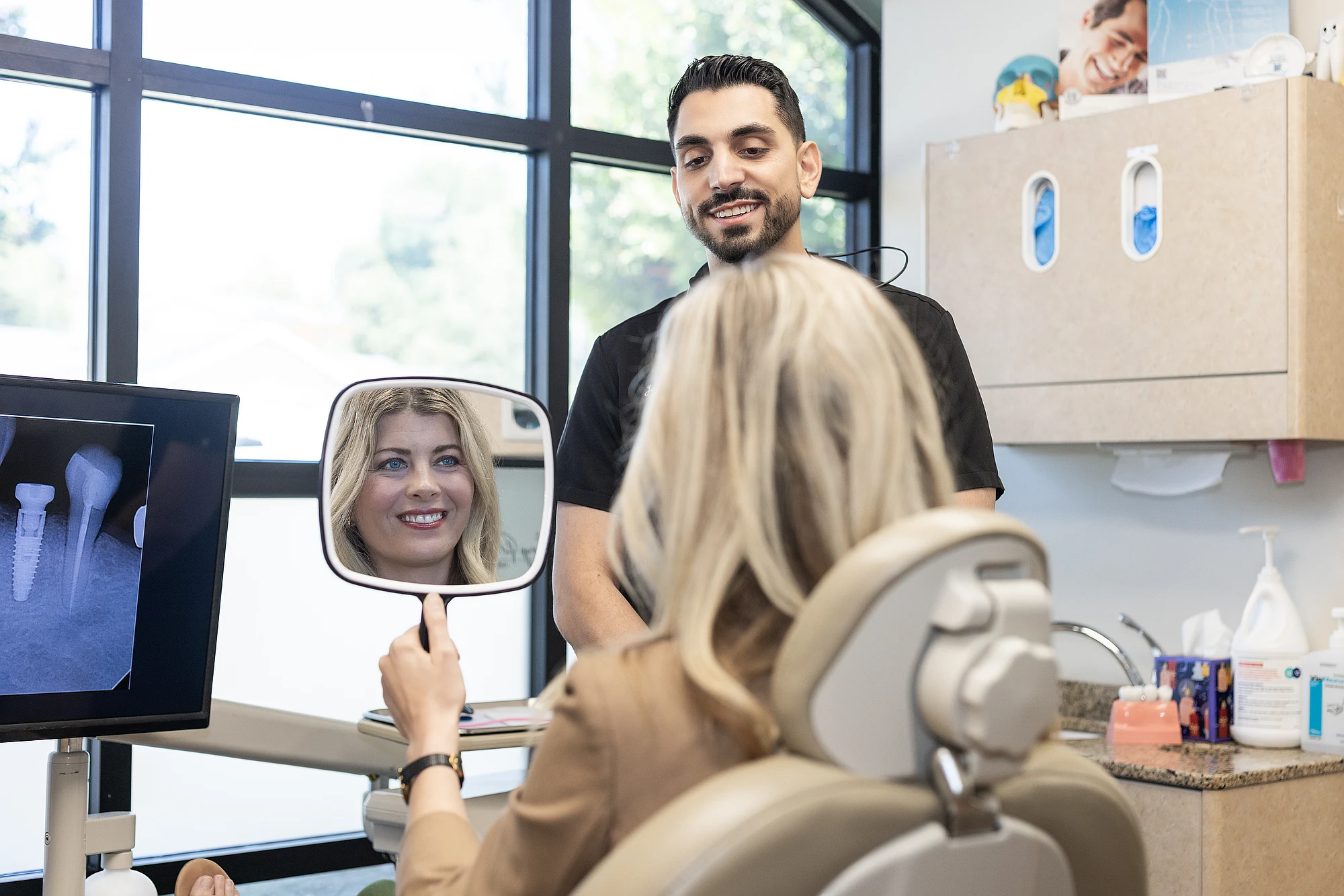
A dental bone graft is a procedure that adds graft material to an area of the jaw where bone volume has been lost or where additional support is needed. The dentist evaluates the bone anatomy with an examination and appropriate imaging, prepares the site, places the graft material, and protects it during healing before reassessing for the next phase of treatment. Grafting is used after extractions, before or during implant treatment, and for selected periodontal defects.
Bone Grafts FAQ
- What are bone grafts?
- Dental bone grafting adds graft material to an area where bone volume has been lost or where additional support is needed. It may be performed after an extraction, before or during implant treatment, or as part of periodontal regenerative care. Different graft materials and techniques can be matched to the defect.
- How do I know if I may need a bone graft?
- An examination with appropriate imaging, such as 3D Cone Beam CT, is the best way to know whether you need a bone graft. Grafting may be considered for bone loss after tooth loss or infection, sites without enough bone for a planned implant, extraction sockets where preserving the ridge is important, or selected periodontal defects. The recommendation depends on the bone dimensions, the defect, and your treatment goals.
- Are bone grafts uncomfortable?
- Local anesthesia is commonly used for surgical dental procedures so the treatment area is numb. Soreness and swelling can occur during healing. The dental team will review postoperative instructions for your specific procedure.
- How long does a bone graft take?
- The timeline for a bone graft depends on the amount of existing bone, the shape and location of the defect, and whether it is combined with implant placement. Some grafts can be completed at the same time as an implant, while other defects need a separate healing phase first. After an evaluation, the dental team can outline the expected sequence and appointment length.
- What follow-up is needed after a bone graft?
- After a bone graft, the site is protected during healing and reassessed before the next phase of treatment. That next phase may be implant placement, a restoration, or continued periodontal care. The dental team will review postoperative instructions and schedule follow-up based on how the graft heals.
- Why schedule a consultation for bone grafts in Newbury Park?
- A consultation allows the dentist to evaluate your bone dimensions and nearby anatomy and explain whether grafting is needed for your plan. Imaging such as 3D Cone Beam CT may be used to support planning, although the surgical approach is finalized from the full clinical picture. Grafting is planned around what the site needs to support next.
Have Questions About Bone Grafts?
Schedule a consultation to discuss your concerns, review your options, and determine whether bone grafts are appropriate for you.