

RESTORATIVE
Dental Fillings in Newbury Park, CA
Conservative restorative treatment for cavities and smaller areas of tooth damage, with attention to fit, bite, and natural appearance.
The material and technique are chosen for the size and location of the cavity, with attention to how the restoration meets your bite and blends with the surrounding enamel.
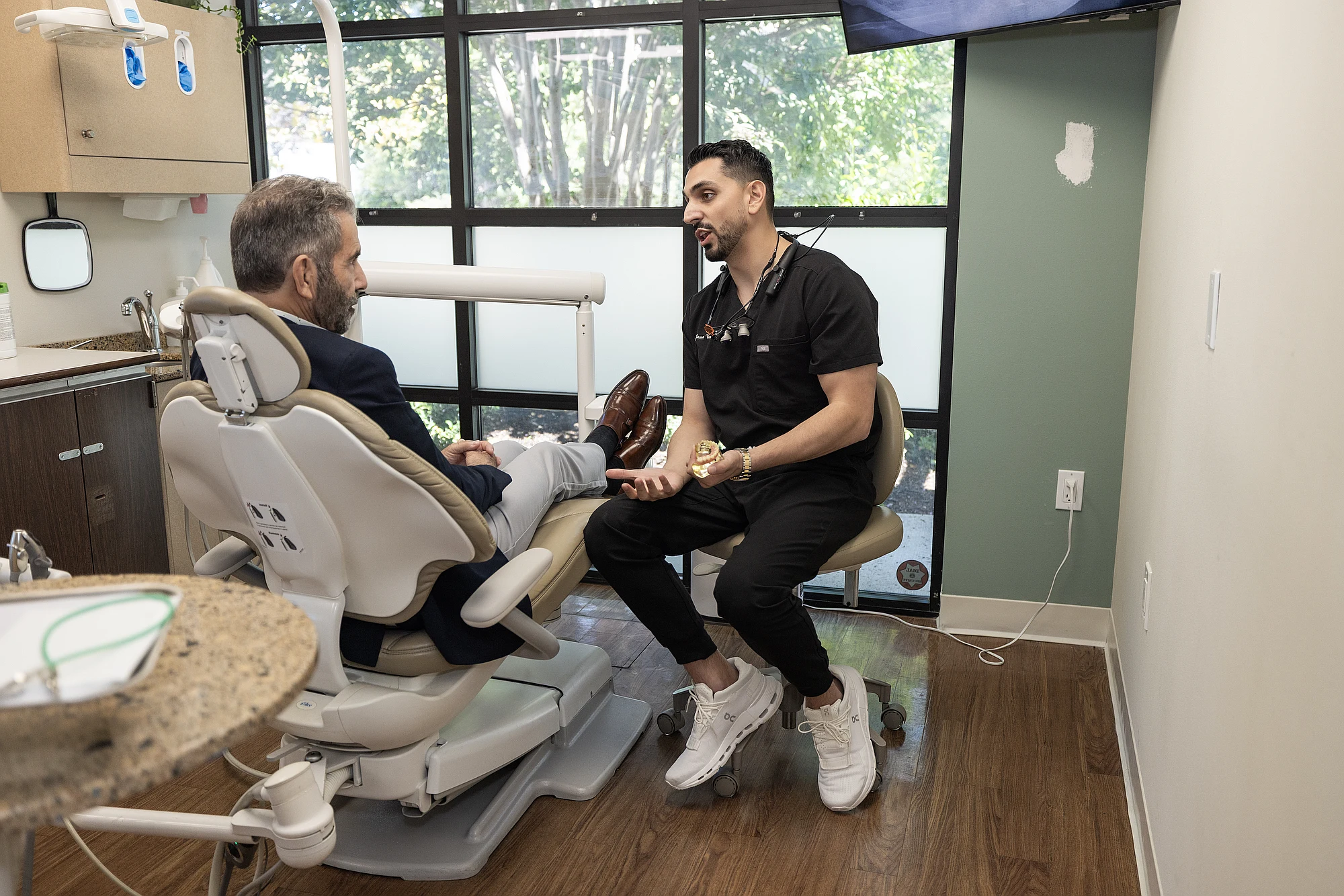
Modern Dentistry, Beautifully Personal

Dental Fillings at Newbury Park Dental Arts
Dental fillings replace tooth structure lost to decay or small fractures. Tooth-colored composite is commonly used because it bonds to the tooth and can be shaded to blend with surrounding enamel, although the best restoration depends on the size and location of the defect.
What Dental Fillings Can Address
- Small to moderate cavities
- Replacement of selected failing fillings
- Minor fractures or areas of lost tooth structure
- Localized defects that do not require full crown coverage
Why Dental Fillings May Be Recommended
- Removes decay while preserving as much healthy tooth structure as practical.
- Tooth-colored materials can blend with surrounding enamel.
- Restores a smoother surface and normal chewing contact.
What to Expect With Dental Fillings
Identify and isolate the area of decay or damage
Remove compromised tooth structure and prepare the site
Place, shape, harden, polish, and adjust the restoration
Technology that may support care: Digital X-Rays and Intraoral Cameras.
Who May Be a Candidate for Dental Fillings?
You may be a candidate if you have a concern such as small to moderate cavities, replacement of selected failing fillings, minor fractures or areas of lost tooth structure, or localized defects that do not require full crown coverage. Candidacy also depends on the health of the teeth and gums, the amount and quality of supporting tooth or bone structure, your bite, medical considerations, and whether the expected benefit justifies treatment.
When a Filling Is No Longer Enough
The larger a restoration becomes, the more important the strength of the remaining tooth becomes. If a tooth has extensive decay, cracked cusps, or a very large existing filling, a crown or another indirect restoration may provide better protection than replacing the filling again.
Why Early Cavities May Not Hurt
Decay can progress without obvious symptoms, especially in its earlier stages. Dental exams and appropriate X-rays help identify problems before pain develops. Treating a smaller lesion may allow a more conservative restoration than waiting until the tooth becomes symptomatic.

The short answer
A dental filling is a restoration that replaces tooth structure lost to decay or a small fracture. The dentist isolates the area, removes compromised tooth structure, then places, shapes, hardens, and polishes the restoration and adjusts it to your bite. Tooth-colored composite is commonly used because it bonds to the tooth and blends with surrounding enamel, and treating a cavity while it is small may allow a more conservative restoration.
Dental Fillings FAQ
- What are dental fillings?
- Dental fillings replace tooth structure lost to decay or small fractures. Tooth-colored composite is commonly used because it bonds to the tooth and can be shaded to blend with surrounding enamel. The best restoration depends on the size and location of the defect.
- How do I know if I may need a dental filling?
- A dental exam with appropriate X-rays is the best way to know whether you need a filling. Decay can progress without obvious symptoms, especially in its earlier stages, so a cavity may be found before it causes pain. Fillings may be considered for small to moderate cavities, selected failing fillings, minor fractures, or localized areas of lost tooth structure.
- Are dental fillings uncomfortable?
- Local anesthesia is used when a filling involves sensitive tooth tissue, which helps keep treatment comfortable. Comfort measures depend on the size and location of the cavity. The dental team can discuss what sensations are typical for your specific plan before treatment begins.
- How long does a dental filling take?
- The time a filling takes depends on the number of teeth involved and the size and location of each cavity. Treatment involves isolating the area, removing compromised tooth structure, and placing, shaping, hardening, and polishing the restoration. After an evaluation, the dental team can outline the expected sequence and appointment length.
- How long do dental fillings last?
- How long a filling lasts varies with the material, bite forces, oral hygiene, maintenance, and habits such as clenching or chewing hard objects. As a restoration becomes larger, the strength of the remaining tooth becomes more important, and a crown may eventually provide better protection. Regular exams help identify wear, leakage, or changes before they become larger problems.
- Why schedule a consultation for dental fillings in Newbury Park?
- A consultation allows the dentist to evaluate the tooth, review X-rays or intraoral camera images, and explain whether a filling or another restoration fits your situation. Treating a smaller lesion may allow a more conservative restoration than waiting until the tooth becomes symptomatic. Treatment should be based on your individual findings rather than a generic recommendation.
Have Questions About Dental Fillings?
Schedule a consultation to discuss your concerns, review your options, and determine whether dental fillings are appropriate for you.